Tuesday, April 7, 2020

npm2020: poetry videos day 7 "In Praise of Squirrels"

My National Poetry Month Project 2020 is to record a short video each day in April featuring me presenting my published poems.  For poetry lovers of all ages!

I'm just not sure any of us appreciate squirrels enough....


In Praise of Squirrels


just for being out
in broad daylight
in every yard and park

prudent nut hunters
fools flinging themselves
from tree to tree

high-wire acrobats
daring over busy roads
secret diggers in the dark

harmless, fearless
minding their own bushy business
neither fierce nor tame

nobody’s and everybody’s
winsome wildlife pet
frisky whisky yes indeed

but praise be to squirrels:
how willingly they share
their neighborhood with us

Monday, April 6, 2020

npm2020: poetry videos day 6 "Falling"

A bedtime poem from SQUEEZE: POEMS FROM A JUICY UNIVERSE.


My National Poetry Month Project for 2020 is to record a short video each day in April featuring me presenting my published poems. For poetry lovers of all ages!
Falling A yawn is a wide-open yes to sleep. I pray the Lord my soul to keep… from leaping out my gaping mouth. Morning, noon and night fly south and light upon baredozing toes. Tickle tickle little nose, how I wonder what this wind is sweeping out or sucking in. My teeth float down in a feathery heap. Yes to the wide-open yawn of sleep.

Sunday, April 5, 2020

npm2020: poetry videos day 5 "Petaling"

My National Poetry Month Project 2020 is to record a short video each day in April featuring me presenting my published poems.  For poetry lovers of all ages!

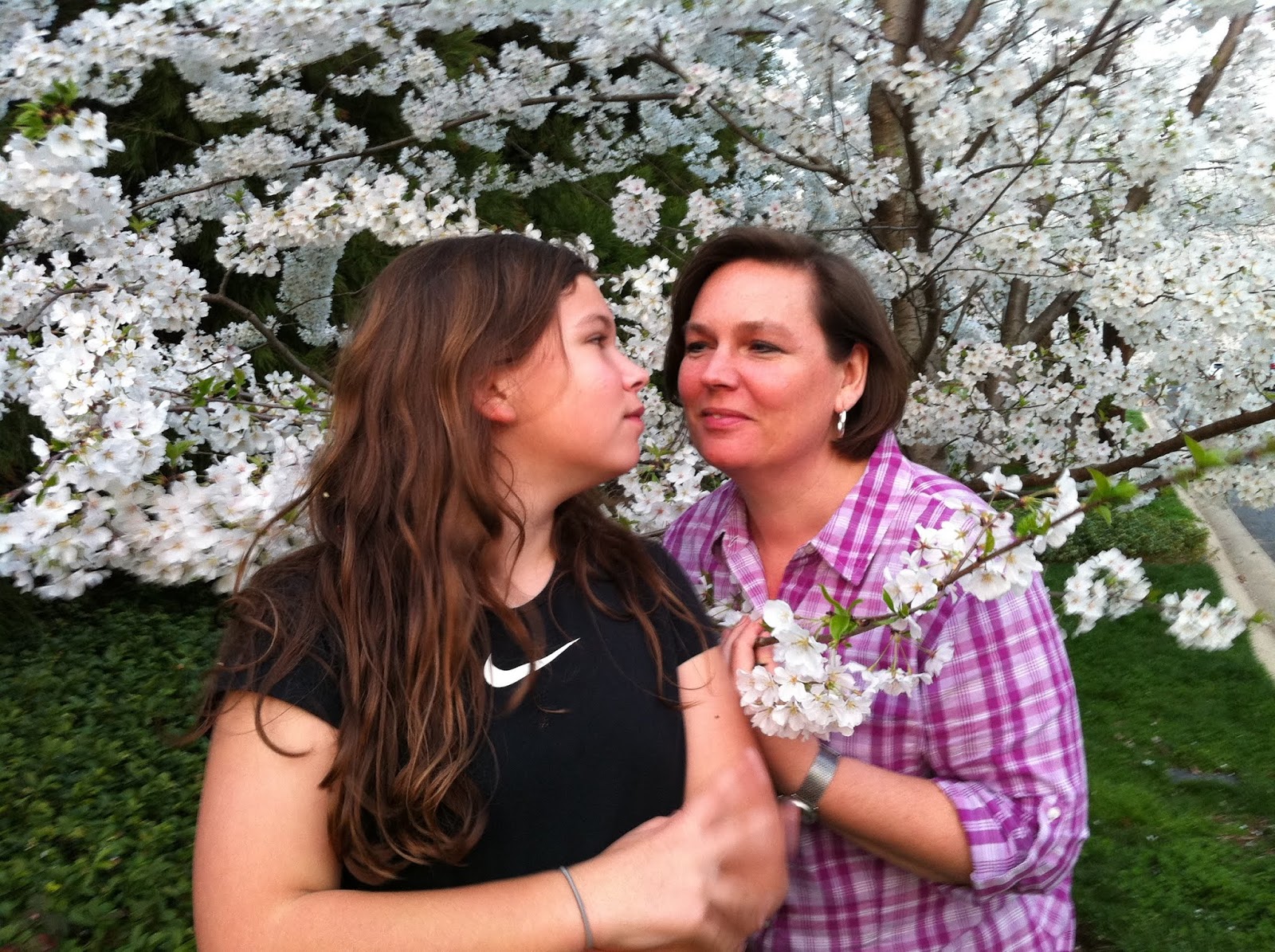
Today's poem is "Petaling," inspired by the cherry blossoms at Kenwood in Montgomery County, Maryland.  Our family has visited every year since 1999!


Saturday, April 4, 2020

npm2020 poetry videos day 4 "Launch"

My National Poetry Month Project 2020 is to record a short video each day in April featuring me presenting my published poems.  For poetry lovers of all ages!

Today's poem features crocuses and rocketships.


Launch

      
Crocuses are rocketing
     inch by inch
          out of the crumbled earth


the yellows aim for the sun
the purples push      toward deep space


      and inside
little astronauts in orange suits
   cock their ruffled helmets
                  toward spring


Friday, April 3, 2020

npm2020: poetry videos day 3 "A Purple Place"

My National Poetry Month Project 2020 is to record a short video each day in April, presenting my published poems to poetry lovers of all ages!

Today's poem is a good one for this time of global pandemic and big feelings.


A Purple Place


Purple is an inside color,
like the lining of a cape—
    like the dusky
    like the musky
inside of a hiding place.

A purple place all lined with dust
that I didn’t know was here—
    a certain place
    a curtain place
behind my granddad’s heavy chair.

And when I’m in this purple place
my heartbeat is the only sound—
    inside the plush
    inside the hush
what’s inside me rushes out.


poetry friday: #shelterinpoetry


Hello farflung poets, teachers and lovers of poetry...
all is at a standstill, and yet you have arrived. 

Linda Mitchell of A Word Edgewise has challenged the Sunday Swaggers to participate in the poets.org #ShelterInPoems project, which asks us to "share a poem that helps to find courage, solace and actionable energy, and a few words about how or why it does so." Then we were to write a companion poem.

Their suggestion is to use one of the many wonderful poems on the poets.org site, but as I rearranged my Library Lounge at home to become Zoom-worthy "PreK Online," I found a sheltery poem in a Billy Collins book I received as a birthday gift.

Have you, like me, noticed many people looking back fondly, in their confinement to better times?  Looking back to when all the grays were covered, when the children were small and adorable, when we could go places side-by-side, or go places at all?  People are sheltering in the past.


Nostalgia | Billy Collins
     from Questions About Angels (1991)

Remember the 1340s? We were doing a dance called the Catapult.

You always wore brown, the color craze of the decade,
and I was draped in one of those capes that were popular,
the ones with unicorns and pomegranates in needlework.
Everyone would pause for beer and onions in the afternoon,
and at night we would play a game called “Find the Cow.”
Everything was hand-lettered then, not like today.

Where has the summer of 1572 gone? Brocade and sonnet
marathons were the rage. We used to dress up in the flags
of rival baronies and conquer one another in cold rooms of stone.
Out on the dance floor we were all doing the Struggle
N for no, S for school
while your sister practiced the Daphne all alone in her room.
We borrowed the jargon of farriers for our slang.
These days language seems transparent, a badly broken code.

The 1790s will never come again. Childhood was big.
People would take walks to the very tops of hills
and write down what they saw in their journals without speaking.
Our collars were high and our hats were extremely soft.
We would surprise each other with alphabets made of twigs.
It was a wonderful time to be alive, or even dead.

I am very fond of the period between 1815 and 1821.
Europe trembled while we sat still for our portraits.
And I would love to return to 1901 if only for a moment,
time enough to wind up a music box and do a few dance steps,
or shoot me back to 1922 or 1941, or at least let me
recapture the serenity of last month when we picked
berries and glided through afternoons in a canoe.

Even this morning would be an improvement over the present.
I was in the garden then, surrounded by the hum of bees
and the Latin names of flowers, watching the early light
flash off the slanted windows of the greenhouse
and silver the limbs on the rows of dark hemlocks.

As usual, I was thinking about the moments of the past,
letting my memory rush over them like water
rushing over the stones on the bottom of a stream.
I was even thinking a little about the future, that place
where people are doing a dance we cannot imagine,
a dance whose name we can only guess.

*****************************************************

Are those Facebook folks looking at old photos also thinking, like me, a little about the future, "that place/where people are doing a dance we cannot imagine"?  

Other people have sheltered in ignorance and selfishness, walking about with their heads and hearts  in the sand.  But, as my minister said a couple weeks ago:

THIS IS WHERE WE ARE,
AND THIS IS WHAT WE'RE DOING.

And we should be brave about it!  I thought very briefly about the companion poem I might write, and then I found this poem by H.D.  I thought about what we are learning even as we shelter in place.  When all this is past, will we remember that to live "wadded in cloth...smothered in straw" might not be better than to "taste of frost—the exquisite frost," than to "find a new beauty/ in some terrible/wind-tortured place"?


Sheltered Garden | H. D. (Hilda Doolittle)

I have had enough.
I gasp for breath.

Every way ends, every road,
every foot-path leads at last
to the hill-crest—
then you retrace your steps,
or find the same slope on the other side,
precipitate.

I have had enough—
border-pinks, clove-pinks, wax-lilies,
herbs, sweet-cress.

O for some sharp swish of a branch—
there is no scent of resin
in this place,
no taste of bark, of coarse weeds,
aromatic, astringent—
only border on border of scented pinks.

Have you seen fruit under cover
that wanted light—
pears wadded in cloth,
protected from the frost,
melons, almost ripe,
smothered in straw?

Why not let the pears cling
to the empty branch?
All your coaxing will only make
a bitter fruit—
let them cling, ripen of themselves,
test their own worth,
nipped, shrivelled by the frost,
to fall at last but fair
with a russet coat.

Or the melon—
let it bleach yellow
in the winter light,
even tart to the taste—
it is better to taste of frost—
the exquisite frost—
than of wadding and of dead grass.

For this beauty,
beauty without strength,
chokes out life.
I want wind to break,
scatter these pink-stalks,
snap off their spiced heads,
painting by Gregoire Boonzaier
fling them about with dead leaves—
spread the paths with twigs,
limbs broken off,
trail great pine branches,
hurled from some far wood
right across the melon-patch,
break pear and quince—
leave half-trees, torn, twisted
but showing the fight was valiant.

O to blot out this garden
to forget, to find a new beauty
in some terrible
wind-tortured place.

**********************************************************************************

You can see other Swaggers' responses to the box challenge at their blogs:

-Catherine at Reading to the Core -Margaret at Reflections on the Teche -Molly at Nix the Comfort Zone
-Linda at A Word Edgewise

I hope you all find some #ShelterInPoems this month, or that you unwrap yourself (metaphorically) and step into some valiant fight.  For my part, now that I have my own personal YouTube channel, I'm going to celebrate National Poetry Month by posting a video reading of one of my own poems each day (starting tomorrow when I have recovered from a massive overload of distance-learning screen time).  Do you perhaps have a favorite to request?

AND NOW...the Round-Up.  Add your link, and be well, friends.

You are invited to the Inlinkz link party!
Click here to enter


Thursday, April 2, 2020

npm2020: poetry videos day 2 "Throwing the Roads"

This month, National Poetry Month 2020, I'm using my new digital recording skills and my new YouTube channel to practice performing my poems live.

Here for April 2 is a poem from SQUEEZE: POEMS FROM A JUICY UNIVERSE called "Throwing the Roads."  The idea for this poem came from an old friend, Duncan Armitage, who played a version of this game with his brother when they were young.  Big thanks to "Uncle Big Duncan" for sharing!


Wednesday, April 1, 2020

npm2020: poetry videos day 1 "April Gale"

This month, National Poetry Month 2020, I'm using my new digital recording skills and my new YouTube channel to practice performing my poems live.  Just as teaching online and sharing recorded read-alouds is very different than classroom teaching face-to-face, performing for the camera is really different than reading to an audience, but it's practice all the same.

So here, for April 1, is my first rather amateur poetry reading video!  These are short, just one read-through, so if you're watching with children, consider playing it twice.   : )


Friday, March 20, 2020

daily questions for day-to-day existence


Photographer Brooke Anderson’s post-it note list has been shared over 20,000 times.

A List, Getting Longer 

I see you, you see me, we talk, raise a fork or a glass, 
we are Jetsons in baggy pajamas.

You who are close but closed in, you who walk beside me
six safe feet away, you who am I. 

Single actual appointment on the color-coded schedule is therapy, 
which I miss, blithely playing solitaire. 

In light rain after dark we huddle around the brand-new hand-dug possibly-illegal 
fire pit and roast marshmallows. 

When efficiency is no longer valuable, I make a trip up the stairs carrying a single earring
which has been separated from its mate. 

Heart hanging on the front door, cloth napkins hanging on the laundry rack, me hanging on
every beautiful donation my network makes. 

©Heidi Mordhorst 2020

gf.me/u/xrngmt 

*******************************************
Michelle Kogan is our host for a spring celebration this Poetry Friday. Dear ones, you matter to me.


Friday, March 13, 2020

another way to look at it: coronavirus edition

planet earth is blue and there's something we can do
It's the first second Friday of the month and so the members of our critique group human community once again have a challenge before us: we are now entering a period during which daily life as we know it cannot be sustained.  The inconvenience, the disappointment, the sorrow are monumental.

People are feverish with virus and anxiety, and the contagion can barely be contained. Our fear for our own lives and those of our neighbors has spurred us into immediate and collective action, with or without the wise or courageous leadership of our elected officials.

This, friends, is the response the young people have been looking for in the face of catastrophic climate change.  The planet is feverish with emissions and wild weather, and the reckless squandering of resources has not been contained.  Our fear for our own lives and those of our neighbors has not spurred us into immediate and collective action, despite the wise and courageous leadership of our youth, our scientists and our public policy experts.


But now that can change.  
Now we see that what must be done, can be done
if we have enough fear.  The governor of a state can go on TV and simply declare that 
you must not keep dumping your food waste into the same bin as your trash.  
A school system can spend a short amount of time and, to the best of its ability, redirect its resources and transform its operations to make school transportation
greener and more efficient. Churches, nonprofits and individual families 
can cooperate to reverse global warming now, if we
accept that "business as usual" is no longer sustainable.

This is the silver lining.  This is the moment.  
This is the straw that breaks the camel's back; this is the inconvenient truth.
No mud, no lotus.  No dark of night, no day.
This is where we see that us and them, that now and next, are the same. 

Friends, be careful out there. Be wise and courageous IN there. And when we have moved through this challenge, don't forget that we proved we can move through the next infinitely bigger challenge.


Friday, March 6, 2020

sunday swaggers question themselves

It's the first Friday of the month and so the members of our critique group once again have a challenge before them:  to write a question poem.  That is all the guidance our friend Margaret Simon has given us!

Now I like a prescribed form as much as the next poet, for its opportunity to stretch my skills within defined boundaries, but as I note in this piece (which I wrote back in 2011 and have just rediscovered!) free verse is my jam.  So Margaret's challenge is a nice one for me, since I may pose my question/s in whatever form the poem itself seems to demand.  To me a poem is not a poem unless it can show off its shapeliness, unless it operates by some detectable pattern or principle that becomes constraining even if it then breaks free by the end.

I wonder if this poem, written for Laura Shovan's February Poetry Project on February 14th, meets that criterion.  I myself posted the photo and the prompt, which was "MELT IT."


******************************************************************************

Meanwhile, I have begun a poetry collaboration with a 5th grader, NZ, whom I taught in 2nd grade.  Poetry just oozes out of him wherever he goes, so I suggested a shared Google Doc and we've been poeting back and forth.  Here's our current exchange...


Some Questions

HM What is it like to be an only child?


NZ Don’t know, I never was. I imagine freedom, 
more love than anything in the world. 


HM No, I never was. What is freedom?


NZ Freedom is the wind blowing on my face,
while my dad hugs me on the boardwalk
next to the great big ocean.


HM The loose wind of the world, the tight hold of a hug.
Is freedom made of push and pull?


NZ Something like that. Freedom can be
being set free, or it could be the opposite,
something holding you back.


How do you see the world?
A meaningless piece of rock,
a speck of dust in the ever growing universe?
Or something more?


HM Something more, something more.  
The rock makes meaning as it breaks from the soil,
as it is built and falls from the human wall,
as it crumbles into dust carried by the wind.

NZ That wind, what does it feel like
as it carries the dust into the great big galaxy?

************************************************************************************
And finally, I was wondering last night:

We poets, are we not the posers
of answers rather than questions?

You come to us for our philosophies
of blades of grass and breaking glass,
of blaring joy and ominous birds,
and surely our job is to answer, like
oracles dropping flowers on the water
from our coracles woven of words.

We poets are paddlers, leaving you,
leading you to the answers, not
leaking a trail of questions like
bread crumbs along the path only
to be eaten, to take up rain, to sink 
slowly toward the bottom, nibbled
by fishes along the way.  

Is it not so, that we poets are here to
tidily bundle up the salty grains of truth?

©Heidi Mordhorst 2020
InstadraftTM

*******************************************************************************

Don't forget to visit the rest of the Swaggers to see what "question poem" means to each of them, and thanks to Rebecca for hosting at Sloth Reads this week!


Friday, February 28, 2020

as muCH AS My


Good morning and welcome to a nerdy, rambling post in which I start with a simple (albeit stunning) photo and end with, perhaps, a colonoscopy.  There will be a poem, too.

I'm the family social secretary, and twice recently I've made confused errors with events on our family calendar. I saw a haircut scheduled on Feb. 14 that I was sure wasn't right, and took some time texting with my stylist to establish that no, I didn't make an appointment on Valentine's Day, but wasn't it a coincidence that my spouse ALSO had a haircut on Valentine's Day?! Turned out that was a real appointment, that the one I was seeing on the calendar WAS my spouse's, never mine, but for two days I thought there were two concurrent appointments! And then I sat right at the Sunday evening family meeting, reported my teacher training event located miles away, and then planned to pick my son up on that day--which, by the time the day arrived, I realized I couldn't possibly do.  (The reason that I'm the social secretary is that both spouse and son sat in that meeting and neither one questioned my flawed plan as I was making it.)

These incidents, and certain other signs of aging, have me questioning my own ability to do what I've always been especially good at: to remember verbatim what has passed in a conversation, to observe keenly and take detailed note of what is happening when and how.  My own precision in this is noticeable because of how I've heard my spouse recount conversations I've witnessed, using language that is at best in the same hemisphere as the conversation--but not nearly in the same neighborhood, never mind the same house. (She also says that no one wants to hear this much detail, for example at a cocktail party; they want to get to the punchline faster.  I say there are plenty of people I know--hello writers--for whom the detail IS the cocktail, the party and the punchline.)

I keep thinking about what psychology research tells us about the unreliability of eyewitness testimony, and how our brains use all kinds of unconscious bias to build memories which we then treat as objective fact, and I begin to wonder if I have ever been as good at reporting my own observations as I think.  Am I, at nearly 56, losing a skill I really had, or did I never have it, because no one does?  This is very concerning for someone who relies on being right about stuff for their mental health.  Okay, maybe for their mental unhealth.

So, the poetry. I'm participating in Laura Shovan's 8th Annual February Poetry Project.  There are about 35 participants and someone provides a prompt for every day with a water theme this year.  It has taken up a good part of my poetry attention, which is why I didn't see Cheriee Weichel's host post last week until Linda Mitchell wrote a poem based on a form created by Avis Harley, the subject of Cheriee's post and of one on Sylvia Vardell's Poetry for Children blog in 2011. (Are you with me?) "Wow!" said my puzzly wordnerd detail brain. "I too want to write an intravista! Two poems in one! Deep hidden meanings! Orthography!  Let's go!"

That day's prompt was this photo by Catherine Flynn, of a particular piece of the Grand Canyon called Elves Chasm.  What better image to inspire a poem with a canyon full of more to see inside?  So I started writing.  And here's the thing:  I don't know how I did it.  I know I found the word "knives" with the little word "I've" hiding in it, which indicated a first person voice, and I knew I wanted the elves in the poem, and then I realized that I would have to choose the embedded words first and write around them somehow.  And then a thing happened where a) I was in full Csíkszentmihályiesue flow and b) the needs of the embedded poem and the needs of the outer poem were talking to each other in a conversation which I could observe and record, but not exactly control until the poem finished itself.  This mental state, for a person who overthinks and overcontrols and relies on being right, is a very very very great relief--joy, even.  Kind of like that "twilight" feeling you get with the light anaesthesia of a colonoscopy. (Don't say I didn't warn you.)

Et voila, the poem.

           ©Heidi Mordhorst 2020

So, thanks to Cheriee and Avis and Sylvia and Linda and Laura and Catherine, who all had a role in my blissful elfin chasmic flow of joy, and thanks to Karen, who's hosting today at her shockingly clever blog. May you ride or escape the flow today, as you choose.