Friday, April 29, 2011

a way


a way

I am not
coming
for now; the five thousand
steps are
too far
and your stones
are pushed down,
buried by sifting, thickened
drifts beyond
my bare foot's reach


another year maybe
clouds
will thin, expand
cast a light
rain along your bounds
so that even this blind
I might find
a way across
again, arrive
alone, alive


~ Heidi Mordhorst 2011
all rights reserved

Friday, April 22, 2011

mission accomplished


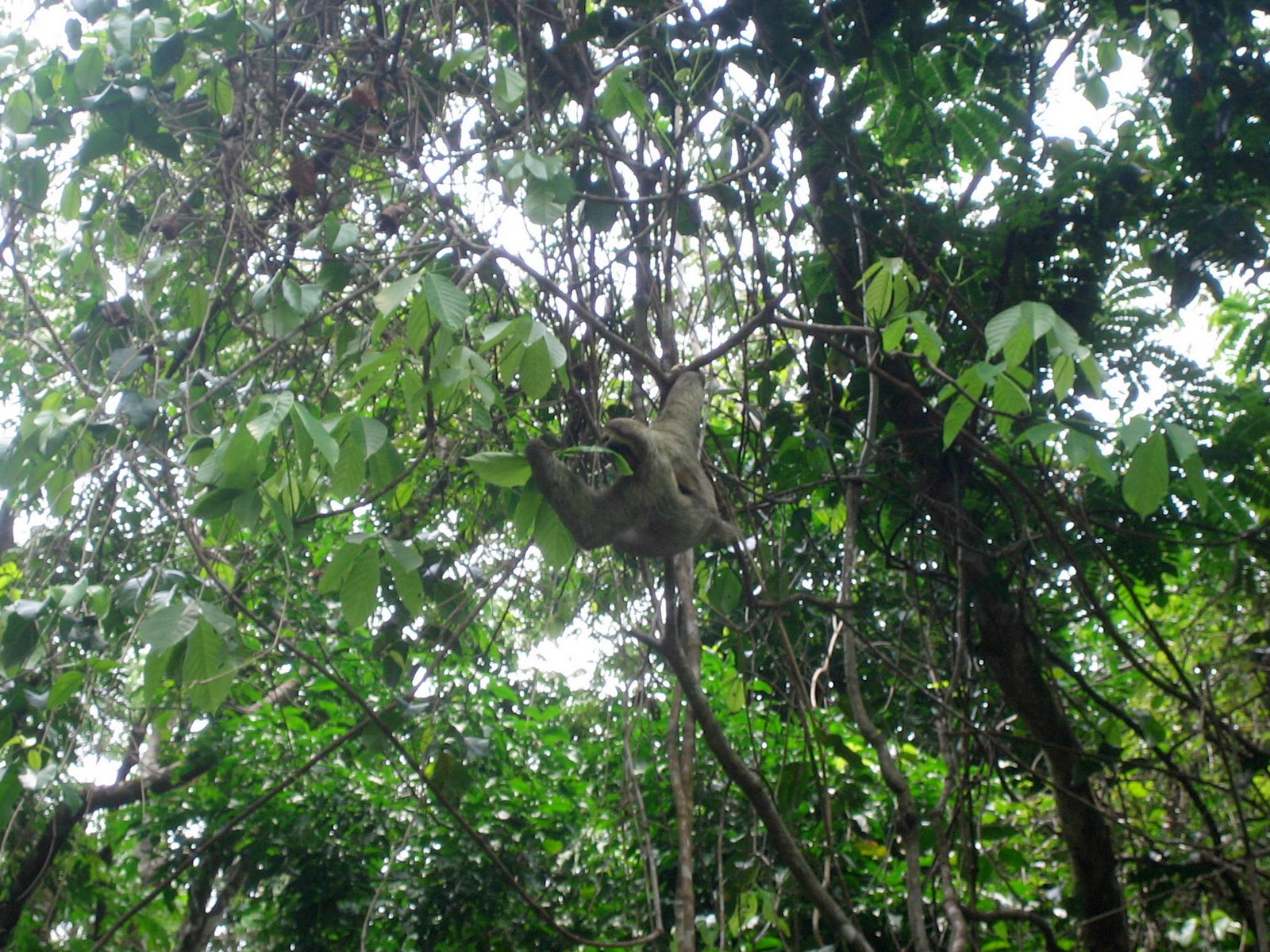
Yesterday: sloth in Manuel Antonio National Park. Today: sloth by the pool. Pura vida!
Posted by Picasa

Friday, April 15, 2011

the middle is the end and the beginning

In our school district, teachers have been teaching (and testing) for 9 weeks straight without a day off, and if you count all the way back to January, for 15 weeks with only a couple of 3-day weekends to catch a breath. This middle day of April is the end of one butt-kicking passage of time, and the beginning of the most exciting, most needed Spring Break I've had in...in...in EVER. We're going to Costa Rica!


I'm thankful that I'll still be a presence during NaPoMo, thanks to TOMORROW's post by Gregory K featuring "The Playroom Floor Writes a Novel" at 30 Poets/30 Days, and thanks to Laura Shovan at Author Amok, who is including a new poem of mine in her NaPoMo project featuring Maryland poets TODAY!

For now, in honor of both the wildlife I hope to encounter in Costa Rica and the lifestyle I hope to enjoy there, a classic by Theodore Roethke:

The Sloth


In moving slow he has no Peer.


You ask him something in his Ear,

He thinks about it for a Year;


And, then, before he says a Word

There, upside down (unlike a Bird),

He will assume that you have Heard--


A most Ex-as-per-at-ing Lug.

But should you call his manner Smug,

He’ll sigh and hive his Branch a Hug;


Then off again to Sleep he goes,

Still swaying gently by his Toes,

And you just know he knows he knows.


~ Theodore Roethke


Today's roundup will find us all wrapped up in noodles by Diane Mayr at Random Noodling.

Thursday, April 7, 2011

alice oswald

When I taught in England in the 90's, I was truly surprised to find how few of the books I grew up on--picture books and classic middle-grade novels both--were known at all in the UK, and how many British classics were, in turn, unknown to me. I guess it was surprising because of the place of authors like A.A. Milne and Beatrix Potter in the American canon, which could lead a reader to believe that their lesser-known British compatriots were better represented on the library shelves. I just assumed that similarly, Arnold Lobel and Beverly Cleary and their compatriots would be represented in English libraries, but no one there had ever heard of The Mixed-Up Files of Mrs. Basil E. Frankweiler!

Although the Atlantic is perhaps not so deep a divide these days, when it comes to poetry the crossover may still be difficult. I think so because of a beautiful book, not published here, given to me by my English mother-in-law. It's Weeds and Wild Flowers by Alice Oswald. Her name was new to me, but for the past 15 years or so (her first book came out the year I left London) she has been rising to the top of the milk can of British poetry.

This collection, for adults but accessible to the YA audience, is striking in its conception, mood and presentation. Each poem is titled with the uncommon name--in most cases unfamiliar to me--of a common plant; Oswald then develops each into a character described in a voice which is so spare and so intimate that when I went to find out more about Alice, I was a little shocked to realize that she actually has an "ordinary" human family. Her deep knowledge of each of these plant-people had me believing that these were her relatives.

Here's a poem for April, not my favorite in the book, but which well represents the prickly surface of her carefully structured pieces.

Primrose
First of April – new born gentle.
Fleeting wakeful on a Greenleaf cradle.
Second of April – eyes half open,
Faint light moving under lids. Face hidden.
Third of April – bonny and blossoming
In a yellow dress that needs no fastening.
Fourth fifth sixth – she somehow stands
clutching for balance with both hands.

Seventh of April and tiredness shows.
No rest for three days in unwashed clothes.
Asks (eighth of April) for a little water.
Asks asks until the lips dry out. No answer.
Ninth of April. Head flopped over.
Contorted with headache. Seated figure.
Twelfth of April – eyes half closed.
No light moving under lids. Tense pose.

April the thirteenth. Almost dead.
Face like wet paper. Hanging yellow head.
Still there. Still dying. Fourteenth of April.
Face fading out. Expression dreadful.
Fifteenth sixteenth. So on so on.
Soul being siphoned off. Colour gone.
April the seventeenth. Dead. Probably.
Skull in the grass. Very light and crumbly.

~ Alice Oswald from Weeds and Wildflowers, 2009

The monotone etchings by Jessica Greenman intensify the experience of reading this book--simple yet deeply detailed, restrained yet wild the way we are inside our seed-bearing heads.

The schedule says we're all converging at Madigan Reads this week for Poetry Friday.

Tuesday, April 5, 2011

I get around

April is fun, fun, fun! We all know that poetry is for all times of year, but what poet isn't revved up by the knowledge that this month a nationwide poetry party is going on all night, all day, all ways? I've had some lovely invitations this time around. Look for my work and what wisdom I have to share at these sites. I'll add specific dates when I know them.

ReaderKidz featured essay, "Making a Meal of Poetry" , up now!


Jama Rattigan's Poetry Potluck:"Lasagna Factory," later this week


Gregory K's 30 Poets/30 Days at gottabook later this month:

"The Playroom Floor Writes a Novel"


And in the March issue of the ALA's Book Links magazine, "April Gale" from Pumpkin Butterfly starts off a game of Poetry Tag in Sylvia Vardell's poetry column and features another of my poems offline.

Enjoy!

Friday, April 1, 2011

the fuellest month

My universe turned very juicy indeed on April 1, 1999: on this day was brought forth the fresh, hardy, thrive-anywhere perennial who is my daughter Daisy. Nowadays, what with her ever-changingness, the launch of National Poetry Month, all this spring ("as it comes bursts up in bonfires green,/Wild puffing of emerald trees, and flame-filled bushes"), the first day of April seems to fill up my tank and fuel fresh starts and forward thrust. Heaven knows I need that! (I also need packages that arrive unexpectedly filled with crazy faith and chocolate-peanut clusters, but that's a whole 'nother heart-tickling story...)

I had a few poems in mind for today's post but now I have a better idea, if you'll join me in some April Fuellishness: a poetry game. I'll start, and as your comment you'll add a line to the poem. It's MiniPoetryTag!

It might work best if you cut and paste previous lines into the comment box before adding your line. My job will be to come back this afternoon and wrap the whole thing up, wherever it may have taken us. Ready? (And don't forget to visit Amy at the Poem Farm for all the rest of Poetry Friday.) Here goes....

*******************

Fresh starts, forward thrust--

[to you!]

Thursday, March 24, 2011

resume

Thoughtful commentary will resume after I update my resume and prepare to find a new job. I am now officially an "involuntary transfer."
*sigh* In the meantime, slam bam thank you Mr. Mali...


Definitely beautiful.

Discuss what YOU make this Poetry Friday at A Year of Reading with Mary Lee....She makes me laugh.

Friday, March 18, 2011

life in me like grass on fire

This week I'm celebrating my first foray into publishing poetry for adults. I'm delighted to say that I have three poems in Life in Me Like Grass on Fire, an anthology on the theme of love treated in its broadest, richest sense by 50 members of the Maryland Writers' Association.

Laura Shovan, a fellow Maryland poet (whom I first met at a SCBWI conference), alerted me to the opportunity and has served as a tireless, intuitive editor. She even asked me to write an introduction to the section called "Love Floods the Senses," in which two of my poems are placed--a request that was both terribly flattering and terribly daunting, probably the hardest piece of writing I've done in the last few months.

Our official launch is at the annual conference of the MWA on April 2nd, but you can support "local poetry" by pre-ordering this collection here and now at 20% off. To whet your appetite, here's one of my contributions to the collection, from the section entitled "Friends and Family." (As usual, I'm unable to preserve the formatting of the poem in blogger--can anyone help me solve that problem?)

Ears

DANGER MAD ELEPHANT
read the signs on the boxcar

and my daughter on the verge of three
sits sobbing, hands over her ears
as Mrs. Jumbo rocks her Dumbo
cradling him in the curl of her trunk
the only part of her hugeness
he can reach through the bars
this is the scary part

Baby mine, don’t you cry
she wails, “Mama I need you”

yes, you need me
to tell you why I’m full of tears
why I’m the one who needs a nap
why the clowns are bad guys
and why your days are “full of troubling”
when they used to be one long bubbling bath
of peek-a-boo
I see you

Rest your head close to my heart
to hear what I can’t tell you yet:
the flutter of faraway stork wings

~ Heidi Mordhorst
in Life in Me Like Grass on Fire, MWA Books 2011

Today's Poetry Friday Roundup is with Andromeda at a wrung sponge, where she uses a very interesting volume of poetry to connect all of us to our Japanese earthmates. May stork wings fly eastward bearing renewal.

Friday, March 4, 2011

effective

Wednesday I spent 6 hours in a hearing of the House Ways & Means Committee of Maryland's General Assembly, waiting to testify on a bill regarding, predictably, our public charter school law. While there I heard testimony on a bill that would add teacher "ineffectiveness" to the list of causes for dismissal, along with things like poor attendance and moral turpitude (I don't think that term is used any more but I love the sound of the word turpitude a lot).

This would seem to make sense--as in other professions, if you're not doing a good job you should be, as they say in my partner's consulting firm, "counseled out." The problem is that, despite recent focused research and writing about what great teachers actually do on a moment-by-moment basis, no one is still very sure exactly what constitutes teacher effectiveness--or how to measure it.

Personally, I consider good teaching to be an art, much like poetry. So often the sum of a great poem is greater than its parts; while connoisseurs may appreciate the dazzle of discrete elements of a poem, there is an alchemical mystery to the overall effect, as in this one by Howard Nemerov. It is often this way in the classroom, too.

To David, About His Education
~ Howard Nemerov

The world is full of mostly invisible things,
And there is no way but putting the mind’s eye,
Or its nose, in a book,to find them out,
Things like the square root of Everest
Or how many times Byron goes into Texas,
Or whether the law of the excluded middle
Applies west of the Rockies. .......
........ such things are said to be
Good for you, and you will have to learn them
In order to become one of the grown-ups
Who sees invisible things neither steadily nor whole,
But keeps gravely the grand confusion of the world
Under his hat, which is where it belongs,
And teaches small children to do this in their turn.


Read the complete poem here, and catch the mysterious sums over at The Small Nouns with Ben on this Poetry Friday. He's leading with an homage to Lucille Clifton, also one of my favorite poets during all months of the year.

Friday, February 25, 2011

"I am ewnec"

The poetry version of last week's first-grade effort to grasp character traits...

On the outside, you can see my physical traits:
"I have tanish-pinkish sgin."
"I have krly eyelashs."
"my body is tall"
"my hair is shtrayt"
My words and actions show my character traits on the inside:
"I am a little shiy."
"I am prsistent."
"I take care of my frands"
"I have lost of ideas"
"I am ewnec. there is only one me in the wrld."

And an open letter to colleagues:

As we survey our reading asessment results and think about how best to meet the needs of children in our classes, I want to raise a few points that I think sometimes get insufficient attention in our “data-driven instructional model."

The students we work with are 5, 6 and 7 years old. They are all, to a greater or lesser degree, egocentric, and they live in the here and now of their daily experience. They come to us as children first, and no matter what their academic ability they share the fundamental needs we all have: the need for security and comfort, the need to be known (and yes, loved). That’s partly why we have chosen this job, because we’re good at making little children feel at home in our classrooms--their home away from home.

Our students come to us second as individual learners. Each one has his or her strengths and weaknesses, and part of being a good learner is growing into a sense of where you have the power to help others along and where you might need to ask for help. We create heterogeneous classes because that’s what the world is like, and part of a good education is learning to be an effective participant in a diverse community. (In fact, I believe that’s the whole point of public education in a democracy, which is why, even as a reading teacher, I tend to start my planning with the social studies curriculum in mind).

Third on the list, our students come to us as readers--and now they all have a nice fresh label attached. In my first grade class, for example, I have two boys who are alike in many ways—mischievous, not as intrinsically motivated to “do school” as we might wish, and within 6 months of each other in age (which is quite a lot, really, when you’re only 72 months old). They have both moved from Level 5 to Level 8 since the beginning of the year, but I will not be putting them in the same guided reading group, because they are very different learners.

One is wired to decode pretty well, but he has a hard time focusing on the ideas behind the words, and in general his problem-solving skills are not strong. He needs a lot of support in reading for meaning, and a slower pace will also be a benefit as he struggles with some unfortunate family circumstances. I’ll put him with the Level 5/6/7’s because there he can have a chance to shine a little and the comprehension demands will be manageable.

The other boy is much more attentive to life generally, more observant, has shown himself ready and willing to rise to a challenge as long as it wasn’t actual reading. However, he’s been very conscious of his struggles in comparison with classmates, and now that he’s making some noticeable progress, this is the moment to put him with a snappier group of thinkers, to capitalize on his competitive tendency and to maximize his growing investment in becoming a reader. I’ll be putting him with the 10/11/12’s--for now.

And then there are the books. We know that all Level 8 books are not equal, and just because both boys read the Level 8 fiction selection successfully doesn’t mean they’ll do as well with every other book labeled 8. So it’s part of my job to choose books that will be “just right” for each of these boys labeled Level 8, and those “just right” books may be Level 6’s or Level 10’s or not leveled at all. They may be books that speak to each boy where he is right now, like Goggles! by Ezra Jack Keats, which they both love because of the way Peter and Archie put one over on the big boys. This book is challenging for each boy in different ways, but they are both persevering in reading it because it’s meaningful and because it has become part of our classroom culture.

By now you may have guessed what point I'm getting at. Because our students are children first, who need to feel at home in the culture of a classroom (a culture that we work hard to build), individual learners second, and labeled, leveled readers last, I want to advocate against moving Kindergarten and 1st grade children around at this point in the year.

I feel strongly that any instructional gains we may earn by moving a child into a group with other Level X’s are likely to be cancelled out by the emotional upheaval of moving that child out of one classroom culture (that culture that we so carefully build in community with our students) and into another.

Of course, there are always reasons to make considered exceptions, but I think we mistakenly give up some of our professional power if we allow the handheld assessment device to determine a child’s daily experience of school. I believe in the usefulness of data, and I believe that teachers and children are more than interchangeable pegs in a big pegboard. Grouping by reading level tends to turn us all into pegs.

With respect for all you do in the classroom,
Heidi

Friday, February 18, 2011

bookable

There has been a lot of discussion recently about, to put it dramatically, the death of the poetry anthology and the difficulty of getting our themed and "random" collections of poetry published and recognized. As I read to my kids this week in school--more Ezra Jack Keats for 1st graders (full of poetic moments) and Rosemary Wells for the kindergarteners--it occurs to me that we may be neglecting another approach to getting our best work into the hands of young readers--the "picture poem book."

Wells's Noisy Nora is a grand example of a rhymed picture book text that could easily stand alone, even without her characteristic, finely detailed illustrations, as one poem in a collection like Sing a Song of Popcorn. If we begin to imagine all the picture book texts that could "cross over" into the realm of anthologized poems, it becomes easier to imagine the poems that might cross over in the other direction, into the realm of stand-alone picture books.

There are plenty of out there--one of my favorites is e.e. cummings "little tree" rendered beautifully book-length by Deborah Kogan Ray (and adapted into an actual story, possibly unnecessarily, by Chris Raschka). Several have mentioned the Delmore Schwartz-Barbara Cooney work pictured here, I Am Cherry Alive--enjoy Kate Coombs's reflections on it here. And a kind Booklist reviewer of my own Squeeze suggested that "The best poem, “How to Run Away,” could be a picture book in itself." What a compliment!

Of course, not all good or even excellent poems will stand up to a picture poem book treatment--and if we have exerted ourselves to percolate ideas and write poems from a "collection" point of view, it's likely that most of the poems written from that stance huddle too close to their flockmates to be comfortable out on their own.

I'm going to spend some time reflecting on what qualities make a poem picture-bookable and try to articulate them. I'm also going to be thinking which of my poems offer enough possibility for an illustrator, enough richness to warrant whole books to themselves. And then I'll start thinking again about the agent who might shop them for me!

Which of your poems are "bookable?"

Friday, February 11, 2011

the mystery of zingerline

Recently on NPR's Science Friday there was a piece on how our many online social media opportunities raise a question about the multiple identities we all inhabit and how we present ourselves to the world. I think I'm what you might call a "casual user" of this technology, but even I am splintered across this blog and my static website, two accounts on facebook, LinkedIn and twitter (as yet unused), three email addresses (personal,"writer" and teacher), about a dozen listservs (three different usernames) and a charter school identity. And who knows how many sites (Evite, Groupon, amazon.com to name a few) think they know who I am and what kind of cookies I like?

But long ago--ten whole years and then some--before any of this, when most of us were pretty cutting-edge in having any email address at all, I considered redefining my poet self by writing under a pen name instead of under the same old scary-looking, mispronounceable Mordhorst (which, by the way, is spelled just the way it sounds and pronounced just the way it's spelled, so please don't say MordhUrst). I came back to poetry almost the minute my daughter was born (talk about identity crisis: "You are now Mommy"), and while taking workshops at the wonderful Writers' Center here in Bethesda, I started signing my drafts "Heidi Zingerline."

The new surname choice was totally legit and even served a historical purpose, I thought. My mother's maiden name is Zingerline and with only one set of cousins on her side of the family, both girls, the name is in danger of disappearing from use. Plus, how perfect is that for a poet--zinger-line? Get it?

Then I realized that there was no way to communicate all that information in a byline, and that anyone who didn't know that Zingerline was a real name, mine to use by rights, might see it as a cheesy joke. I briefly considered "Heidi Zingerline Mordhorst," but it's not like "Heidi Mordhorst" needs any further distinguishing feature--maybe, if I had been Lisa Smith my whole life, Lisa Zingerline Smith might have made some sense.

But what really changed my mind was a poem written by a fellow workshopper and instant friend from the Writers' Center. He arrived at a critique group meeting one week in 2000 with this to share, and now the only vestige of my flirtation with Zingerline is in my writer email address, zingerline@gmail.com. Thank you, Lawrence, for your faith in Mordhorst.

Nom de plume
For "Heidi Zingerline," newly named

Mordhorst.
A commanding sound -- so majestic!
It could be a painting
by Vermeer: View of
Mordhorst.

Or a short
story, no? One of Edgar Allan Poe's
more fearsome inventions --
"The Fall of the House of
Mordhorst."

Or a series
for Masterpiece Theatre -- imagine
Alastair Cooke: "Welcome
to tonight's episode of
Mordhorst

Revisited."
I'm sorry I misspelled your name. Please
don't take another just because
my fingers can't type
"Mordhorst."

Ignorant
digits. They pay no attention, and
sometimes the eyes don't either.
But the ears delight in
"Mordhorst."

~Lawrence Biemiller
October, 2000 ~ all rights reserved


The round-up today is with my new acquaintance Carol Rasco, the CEO of RIF. Does my awe at the fact that the CEO of anything big would hang out at Poetry Friday reveal a streak of cynicism, or have I just suffered bad timing?